Accelerating ERP Success - Strategic Procurement & Implementation in the Cloud Era

Author: Melanie Humphries
CEO
introduction
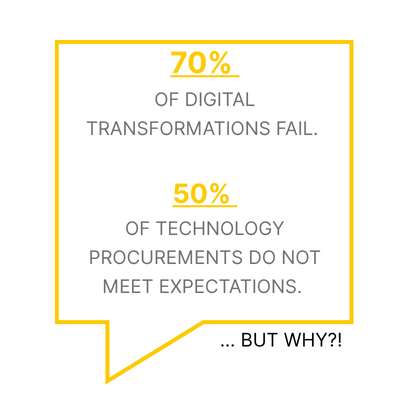
ERP systems are central to modern business infrastructure, yet over 55% of ERP projects fail to deliver on time, budget, or promised value.
With pressure mounting from boards and stakeholders, organisations must move beyond outdated selection models and embrace a modern, agile procurement process that aligns platforms and partners to business outcomes.
This whitepaper synthesises practitioner insights from Melanie Humphries (CEO) and Natascha Polderman (Senior Consultant), two seasoned ERP procurement leaders focusing on how to buy ERP smarter, avoid common pit falls, and deliver value faster.
55% to 75% of ERP implementation projects fail to meet their
objectives - whether measured in terms of cost, timelines,
functionality, or expectedbusiness benefits."
Gartner 2025
the c-suite perspective
Today’s ERP projects are increasingly led from the top. The appetite for digital transformation has returned, and boards are excited again, but they’re also cautious. This renewed interest comes from a belief that modern ERP systems, particularly cloud-native platforms, can finally deliver the automation, insight, and agility that businesses have been promised for years.
But expectations have changed.
Executives want ROI in months, not years. CFOs and COOs, not just CIOs, are demanding systems that can scale, comply with regulatory demands, and integrate seamlessly with their existing data stack.
One common misstep is that too many organisations jump straight to choosing a platform before understanding what business problems they’re solving.
Instead of leading with a technical RFP,
successful projects start with a business-led “North Star”-a shared understanding of what success looks like, what’s broken today, and what risks must be mitigated.
common pitfalls - what goes wrong and why
Despite new technologies and better tooling, many ERP implementations still fail due to avoidable missteps.
There are a handful of key recurring mistakes and challenges observed across the industry, these issues typically emerge early during the procurement phase and compound over time.
1. Choosing a Platform Too Early
Many companies believe that selecting a platform is the first step, however, in reality at this stage organisations are often not ready.
Natascha and Melanie have seen this many times ”If you don’t know the outcome you’re driving toward, any platform will look good in a sales demo.”
The result? Features are purchased that don’t align with the organisation’s real needs, and delivery becomes a game of chasing scope rather than achieving value.
The right approach starts with business alignment.
“You need to know why you’re buying ERP-not just what you’re buying.”
2. Misjudging the Role of the Implementation Partner
In traditional models, the platform and partner are often sourced together, but as often experienced by the consultants at Horizon 7, this can create a false sense of security.
Each should be approached as two distinct decisions. The platform is the foundation, but the partner builds the house. The partner must bring more than just manpower. They must:
- Understand your industry Bring accelerators and tools tailored to your platform
- Fit culturally with your team
- And commit to outcomes, not just hours.
3. Running a Slow, Paper-Heavy Selection Process
Shockingly many procurement processes remain outdated and unfit for purpose, organisations are still spending 6 to 12 months gathering requirements, running RFPs, and reviewing slide decks, only to discover that the original business need has shifted.
With the introduction of AI within the bidding process, buyers are often not evaluating real delivery capability but who can write the slickest generic proposal, designed to score maximum evaluation points.
beyond traditional procurement - agile sourcing (s-fast®)
Cue Horizon 7 and our agile sourcing methodology S-FAST®, developed by our team of procurement practitioners and SMEs, S-FAST® sets the standard for the modern way to source technology.
Instead of relying on paperwork, S-FAST® champions live, sprint-based evaluation models focused on real demos, workshops, and joint planning.
This approach not only speeds up procurement (typically under 20 weeks) but also engages internal stakeholders meaningfully.
Traditional ERP procurement methods typically centred on long-form RFPs, static scoring metrics, and months of paperwork, are increasingly unfit for today’s fast-moving digital agendas.
These legacy approaches often create more confusion than clarity, they prioritise documentation over dialogue, theoretical fit over practical delivery, and process over progress. The result?
Stalled decisions, underwhelming implementations, and mismatched expectations.
S-FAST® replaces traditional, waterfall-style selection with an iterative, insight-driven model that aligns executives, accelerates platform and partner decisions, and builds momentum before contracts are even signed.
Each module of the S-FAST® methodology is anchored by internal collaboration and external engagement and desired outcomes, done in short, structured bursts:
1. Define the 'North Star'
Align business and technology leadership around key objectives.
- What does success look like?
- What risks must we avoid?
- What do we need from our platform and partners
2. Select the implementation partner
Only evaluate partners authorised or experienced with the shortlisted platforms.
- Run live workshops.
- Speak to references.
- Ask how they handle risk.
- Finalise commercials alongside delivery planning.
3. Evaluate platforms
- Invite a small number of suppliers to participate in structured demos based on real business scenarios.
- Don’t ask for 300 line requirement responses, ask to see how they solve a particular workflow or compliance challenge.
- Begin commercial conversations early.
4. Sign aligned contracts
- Finalise both contracts (platform + implementation) with clear success metrics and mutual accountability.
- Agree on a phased roadmap for delivery.
Delivering Value Faster - From Blueprint to Business Benefit
Too often, ERP implementations are treated like a marathon with an ambiguous finish line somewhere years down the road. The reality, however, is that modern businesses cannot afford long timelines, delayed ROI, or stalled momentum - speed to value is now a core executive expectation.
Gone are the days when ERP programs could spend 18 months in design before a single module went live. Executives are asking when they’ll see results before they’ve even signed the contract and this pressure is not just about impatience, it’s about survival.
Market volatility, shifting regulations, and competitive pressure mean organisations need tangible benefits early to justify the investment and keep stakeholders engaged. But delivering faster doesn’t mean rushing. It means being more deliberate, focused, and agile in how implementation is approached. Removing waste!
Importantly, this approach also relies on tight collaboration between business and delivery teams.
The IT team can’t do this alone; business ownership is required from day one.
There are practical ways organisations can shift from blueprint to business benefit quickly without cutting corners or compromising long-term scalability.
Deploy in phases
Don’t wait for a monolithic go live. Start with finance or procurement modules and show early success.
Use what’s available
Don’t over configure. Partners often have accelerators and preconfigured templates, use them to your advantage.
Get the business involved early
Assign product owners from the business side. Train users before go-live and build change champions across teams.
Perhaps most importantly, fund post-go-live optimisation. The project doesn’t end when the system goes live - it begins. Users will need support, iteration, and improvement.
AI, Automation & ERP Hype
ERP marketing has evolved fast, Cloud, AI, machine learning, and intelligent automation are front and centre in supplier pitches but be warned against getting distracted.
To cut through the hype:
- Ask suppliers for live demos using your data or your processes – not generic walkthroughs.
- Don’t judge a demo on polish - judge it on relevance and challenge claims with real scenarios and test cases.
- Focus on delivery credibility over slick marketing.
a smarter way forward
ERP procurement is no longer about ticking boxes on feature lists or choosing the most familiar supplier. It’s about clarity of purpose, agility in selection, and discipline in execution.
Organisations that succeed treat ERP as a business transformation and not just a tech refresh. They define what outcomes matter most, select platforms that support those outcomes, and engage implementation partners who can deliver on time, in scope, and with measurable impact.
FIVE TAKE AWAYS
- Start with the ‘why?’, not the platform.
- Break down procurement into fast, focused sprints.
- Select a partner that fits your culture and based on delivery strength, not just reputation.
- Keep the process lean, focused, and business led
- Ensure executive sponsorship and broad internal alignment.